What Is a Shower Niche and What Size Should It Be?
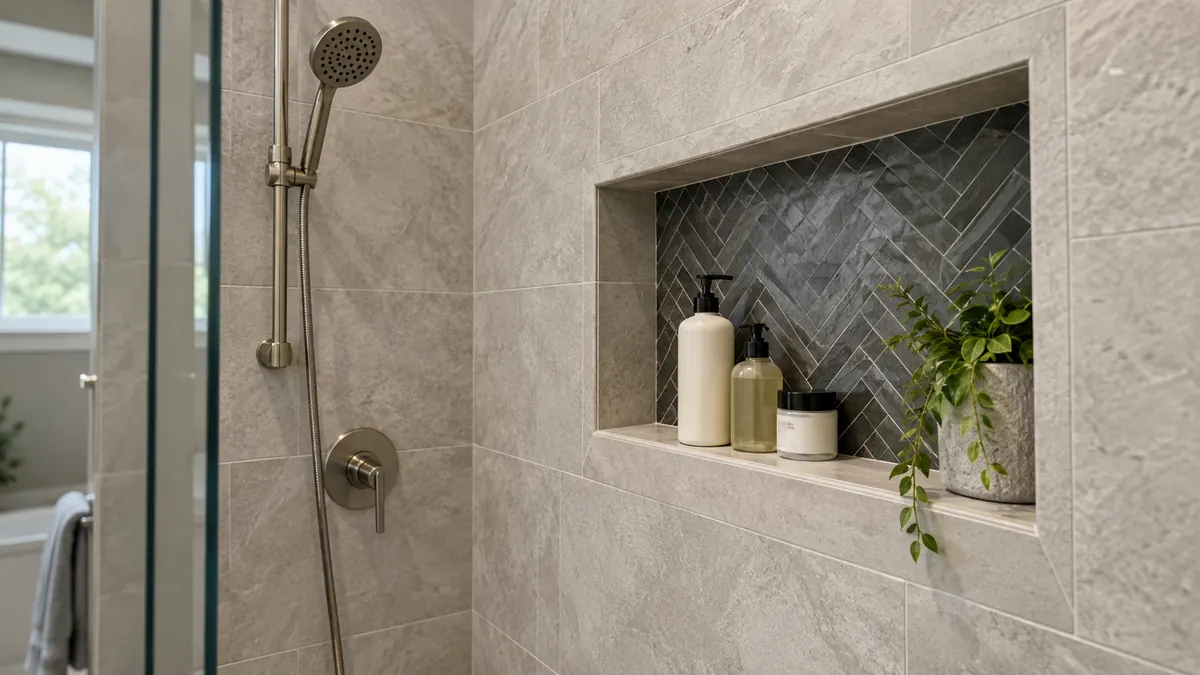
Short answer: A shower niche is a recessed shelf built into the shower wall, so shampoo and soap sit inside the wall instead of on a caddy. The most common size is 12 inches wide by 12 to 24 inches tall, and about 3.5 inches deep, which fits neatly between standard wall studs. Most niches are placed with the bottom shelf around 48 inches off the shower floor, usually on a wall that isn’t directly in the spray and never on an exterior wall. The most important part isn’t the size, though. It’s the waterproofing, because a badly built niche is one of the most common sources of shower leaks.
Let’s go through sizes, height, placement, waterproofing and design so you get it right the first time.
Standard Shower Niche Sizes: Single, Double, Horizontal and Vertical
Wall studs are usually 16 inches apart, leaving about 14.5 inches of open space between them. That’s why most niches are 12 to 14 inches wide. Anything wider means cutting a stud and adding a header.
| Niche Type | Typical Size (W x H) | Best For |
|---|---|---|
| Single square | 12 x 12 inches | Small showers, a few bottles |
| Vertical single | 12 x 24 inches | Tall bottles, with room for a middle shelf |
| Double (two shelves) | 12 x 24 to 12 x 36 inches | Shared showers, lots of products |
| Horizontal | 24 to 48 x 12 inches | Modern look, lining up with tile rows |
| Full width | Wall width x 12 inches | Luxury showers, feature niches |
Depth: Standard 2×4 walls give about 3.5 inches of depth, which fits most bottles. With 2×6 walls you can go deeper.
Pro tip: Size your niche to your tile. If your tile is 12 x 24, a 12 x 24 niche can mean clean full tile cuts and no tiny slivers around the edges.
How High Should a Shower Niche Be?
There’s no single rule, but these heights work for most people:
- Bottom of the niche at about 48 inches from the shower floor, which is easy to reach without bending
- Anywhere between 42 and 60 inches works well, depending on your height
- For a double niche, place the lower shelf around 36 to 42 inches and the upper around 54 to 60 inches
- For kids or seated showering, add a lower niche around 18 to 24 inches, or near the bench
Also think about tile layout. Lining the niche top or bottom up with a grout line makes the finished shower look much cleaner.
Best Placement: Which Wall to Use and Where Not to Put a Niche
Good spots
- The wall opposite the showerhead or a side wall, where products stay out of the direct spray
- The plumbing wall, which is often an interior wall and easy to reach
- Out of the line of sight from the bathroom door, if you don’t want bottles as the first thing people see
Places to avoid
- Exterior walls, because cutting into the insulation can lead to cold spots and condensation, which is a real concern in Vancouver’s damp climate
- Directly under the showerhead, where water constantly pours in
- Walls with pipes, vents or wiring in that stud bay
- Right against the glass door, where it can get in the way of the door swing or glass clips
Plan the niche before framing, so you can confirm the stud bay is clear and add blocking where needed.
Prefabricated vs Custom Tiled Shower Niches
| Prefabricated Niche | Custom Tiled Niche | |
|---|---|---|
| What it is | Ready made foam or plastic insert | Framed and built on site |
| Waterproofing | Often waterproof out of the box | Needs a full membrane system |
| Sizes | Fixed standard sizes | Any size or shape |
| Install speed | Fast | Takes longer |
| Cost | Lower | Higher |
| Best for | Standard sizes, budget projects | Custom designs, big or unusual niches |
Both can work great. The key is that the niche is part of the same waterproofing system as the rest of your shower.
How to Waterproof a Shower Niche Properly
Niches have corners, seams and flat surfaces, which is why they leak more often than flat walls. A properly built niche has:
- A continuous waterproof membrane that connects to the wall membrane, with no gaps
- Pre formed corners or sealed seams in all inside and outside corners
- A slightly sloped bottom shelf that tilts toward the shower so water doesn’t sit
- No exposed drywall or wood anywhere inside the niche
- A flood test or visual check before tile goes on, if possible
Products like foam boards and sheet or liquid membranes all work when they’re installed to the manufacturer’s instructions. A niche that’s just tiled over regular board with no membrane is a leak waiting to happen.
Shower Niche Tile and Design Ideas
- Same tile as the walls for a seamless, minimal look
- Contrasting tile or mosaic inside the niche as a feature
- Stone or quartz shelf for a clean ledge that’s easy to wipe
- Metal edge trim in brushed nickel, black or brass to match fixtures
- Mitred tile edges for a sleek, high end finish with no trim
- LED strip lighting inside the niche for a spa feel
- Long horizontal niche that runs the full width of the wall
How Much Does a Shower Niche Cost?
Costs depend on size, tile and whether the wall is already open.
| Option | Typical Cost |
|---|---|
| Prefabricated niche insert (material) | About $100 to $300 |
| Adding a standard niche during a shower renovation | About $300 to $800 |
| Large or custom niche with trim, stone shelf or lighting | About $800 to $2,000+ |
| Adding a niche to an existing finished shower | Much more, since tile and waterproofing have to be opened |
The cheapest time to add a niche is during a shower renovation, when the walls are already open.
Shower Niche Pros and Cons
Pros
- Clean, clutter free shower
- No rusty caddies or suction shelves
- Adds a custom, high end look
- Lets you use accent tile or lighting as a feature
Cons
- Leaks if it’s waterproofed badly
- Can be hard to clean if the shelf is flat or has tight grout lines
- Limited by stud spacing unless you reframe
- Hard and expensive to add later
Frequently Asked Questions
What is the standard shower niche size?
Usually 12 inches wide by 12 or 24 inches tall, about 3.5 inches deep.
How deep should a shower niche be?
About 3.5 inches in a standard 2×4 wall, which fits most bottles.
Can you put a shower niche on an exterior wall?
It’s best to avoid it, since it reduces insulation and can cause condensation problems.
Should a shower niche be sloped?
Yes, the bottom shelf should slope slightly toward the shower so water drains out.
Can I add a niche to an existing shower?
Yes, but it means removing tile and rebuilding the waterproofing in that area, so it’s usually done during a renovation.
Is a horizontal or vertical niche better?
Vertical niches fit between studs easily. Horizontal niches look more modern but often need reframing.
How many niches should a shower have?
One is enough for most showers. Shared showers often use one double niche or two niches at different heights.
What’s easier to clean, a niche or a shelf?
A niche with a stone or quartz bottom and minimal grout lines is the easiest to keep clean.
Designing a New Shower? Get Expert Tile and Waterproofing Work
A shower niche can look amazing, but only if it’s planned with the framing, tile layout and waterproofing from the start.
At Reimagine Construction and Renovation, bathroom renovations are one of our specialties. For over 15 years we’ve built showers across Vancouver, North Vancouver, West Vancouver and Burnaby, with careful waterproofing and clean tile work that holds up for the long run. We’ll help you choose the right size, height and placement for your niche and design a shower that looks great and stays dry behind the walls.
Book your free bathroom consultation today. Call 604 339 9491 or contact us through our website.