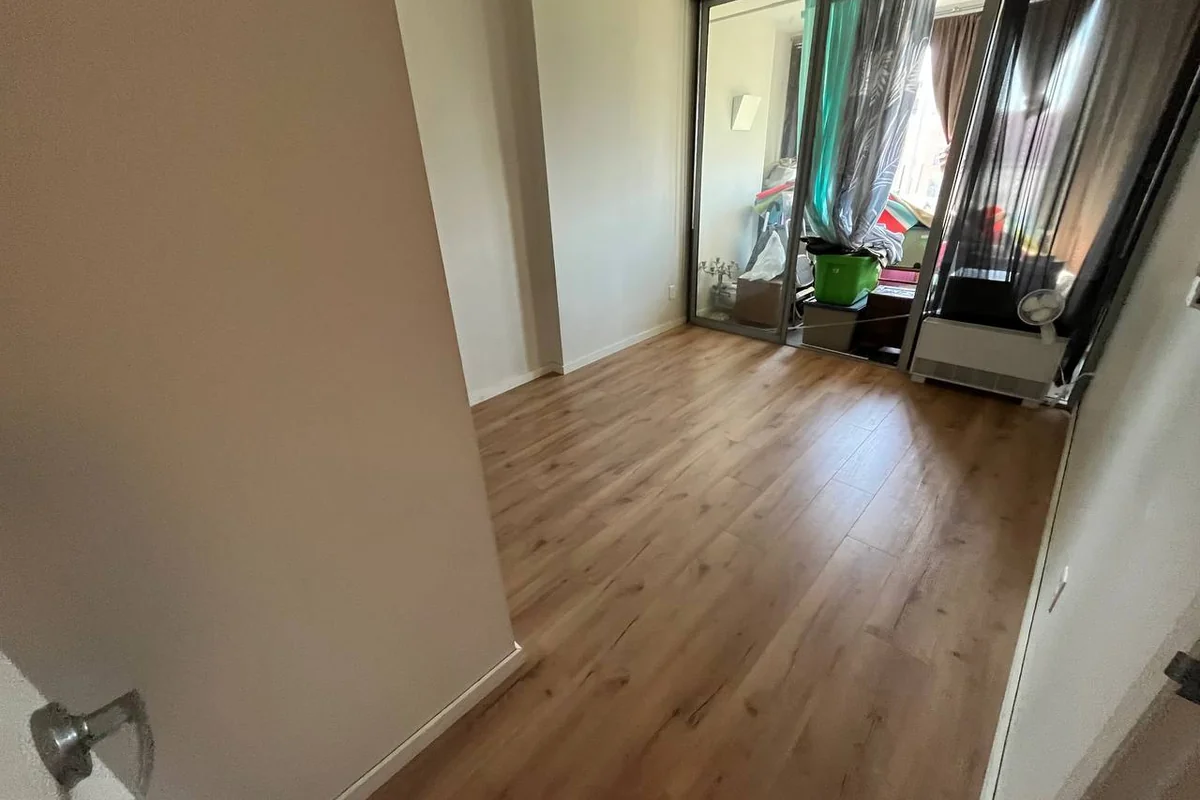
Both engineered and solid hardwood give you a real wood surface, and once installed, most people cannot tell them apart. The difference is underneath. How each board is built determines where it can be installed, how it reacts to humidity, how many times it can be refinished and what it costs.
In Vancouver, where long damp winters, condos with concrete slabs and radiant heating are all common, those differences matter more than in many other places. This guide compares both options side by side and recommends the best choice for each room, drawing on our experience with hardwood flooring installation in Vancouver.
Engineered vs Solid Hardwood: Which Should You Choose?
| Choose Engineered Hardwood If | Choose Solid Hardwood If |
|---|---|
| You live in a condo or are installing over concrete | You have a wood subfloor on an above-grade floor |
| You are installing in a basement | You want the longest possible lifespan with many refinishes |
| You have or plan radiant floor heating | You are matching existing solid hardwood |
| You want wide planks with better stability | You prefer traditional narrow strip flooring |
| Your strata requires a floating floor over acoustic underlay | You can control indoor humidity year-round |
Quick answer: For most Vancouver condos, basements, kitchens and homes with radiant heat, engineered hardwood is the more practical choice. Solid hardwood remains excellent for main and upper floors of houses with wood subfloors and stable indoor humidity.
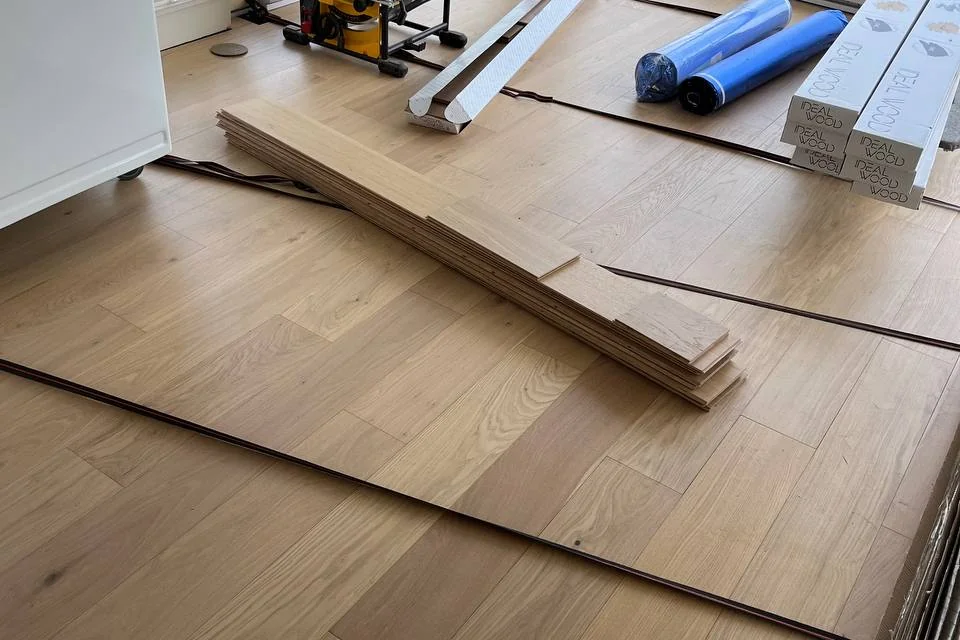
What Is the Difference? Construction and Wear Layer Explained
Solid Hardwood
Solid hardwood is milled from a single piece of wood, typically 3/4 inch (19 mm) thick. Because it is solid wood all the way through, it expands and contracts with changes in humidity, mostly across its width.
Engineered Hardwood
Engineered hardwood has a top layer of real hardwood (the wear layer) bonded to a stable core of plywood layers or high-density fibreboard. The layers run in different directions, which resists movement when humidity changes.
| Wear Layer Thickness | Typical Number of Full Sandings | Typical Use |
|---|---|---|
| Under 2 mm | 0 (screen and recoat only) | Budget products |
| 2 mm | About 1 | Entry-level engineered |
| 3 mm | 1 to 2 | Mid-range engineered |
| 4 to 6 mm | 2 to 4 | Premium engineered |
| Solid 3/4 inch | 4 to 6+ | Solid hardwood |
The wear layer is the single most important specification when comparing engineered products. A thick wear layer on a quality plywood core performs very differently from a thin veneer on a low-grade core.
Side-by-Side Comparison Table
| Feature | Engineered Hardwood | Solid Hardwood |
|---|---|---|
| Construction | Hardwood wear layer on plywood or HDF core | Single piece of hardwood |
| Typical thickness | 3/8 to 3/4 inch | 3/4 inch |
| Dimensional stability | High | Moderate |
| Over concrete | Yes (glue-down or floating) | Generally not recommended |
| Below grade (basement) | Yes, with moisture control | No |
| Over radiant heat | Yes, with approved products | Generally not recommended |
| Refinishing | Limited by wear layer | Multiple times |
| Lifespan | 20 to 40+ years | 50 to 100 years |
| Plank widths | Wide planks common | Narrower planks perform best |
| Installation methods | Nail, staple, glue or float | Nail or staple |
| Installed cost per sq ft (Vancouver) | About $10 to $21 | About $13 to $27 |
Cost: Material and Installation per Square Foot
| Item | Engineered Hardwood | Solid Hardwood |
|---|---|---|
| Material | $6 to $14 per sq ft | $8 to $18 per sq ft |
| Installation labour | $4 to $7 per sq ft | $5 to $9 per sq ft |
| Total installed | $10 to $21 per sq ft | $13 to $27 per sq ft |
| Site finishing (if unfinished) | Not usually needed | $3 to $6 per sq ft |
| 500 sq ft installed | $5,000 to $10,500 | $6,500 to $13,500 |
Additional costs for both include removing old flooring, levelling the subfloor, underlay, stair treads and trim. For a full breakdown, see our flooring installation cost guide.
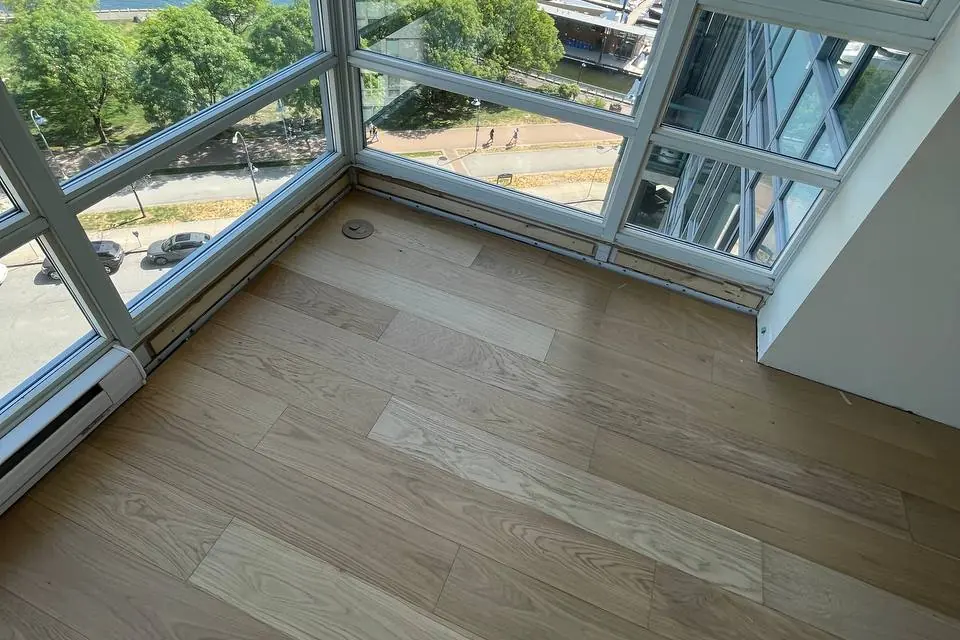
Moisture and Humidity: Performance in Vancouver’s Climate
Vancouver’s outdoor humidity is high in fall and winter, but indoor air can become quite dry when the heating runs. Most flooring manufacturers recommend keeping indoor relative humidity between about 35 and 55 percent for wood floors.
- Solid hardwood is more likely to show gaps in dry periods and cupping in humid periods, especially in wide planks.
- Engineered hardwood moves much less, which is why it is preferred for wide planks, condos and basements.
- Concrete slabs release moisture and must be tested before any wood flooring is installed. A moisture barrier is typically required.
Neither product is waterproof. Standing water from leaks or spills will damage both. For truly wet areas, see our guide to the best flooring for bathrooms.
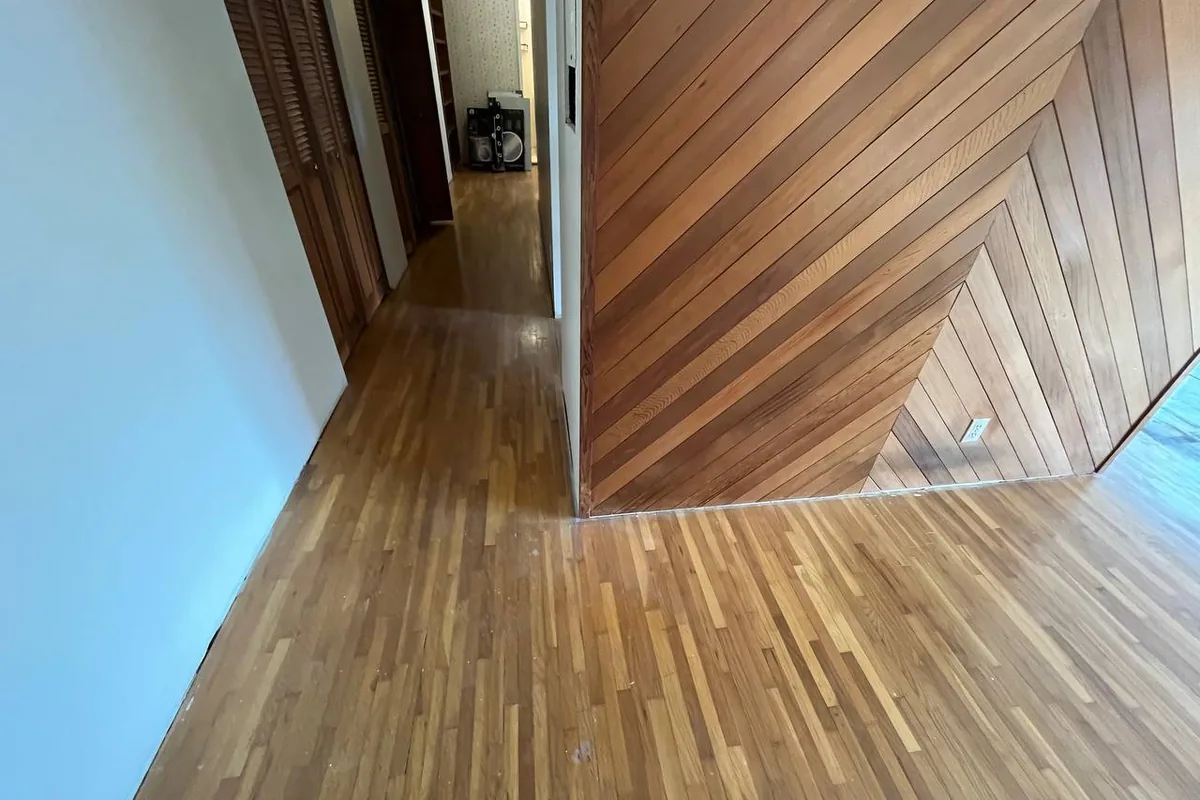
Durability, Refinishing and Lifespan
The surface hardness of both products depends on the wood species and finish, not on whether the board is engineered or solid. Oak, hickory and maple are popular choices for durability.
| Factor | Engineered | Solid |
|---|---|---|
| Scratch resistance | Same species and finish perform the same | Same species and finish perform the same |
| Refinishing | 0 to 4 times depending on wear layer | 4 to 6+ times |
| Repairing deep damage | Board replacement often easier | Can be sanded out more times |
| Typical lifespan | 20 to 40+ years | 50 to 100 years |
How long do engineered hardwood floors last? A quality engineered floor with a 3 to 4 mm wear layer commonly lasts 25 to 40 years or more with normal care. Thin veneer products may need replacement sooner. In larger homes, such as many home renovations in West Vancouver, owners often choose thick-wear-layer engineered planks for wide, stable floors.
Installation Methods: Nail-Down, Glue-Down and Floating
| Method | Engineered | Solid | Best For |
|---|---|---|---|
| Nail-down or staple | Yes | Yes | Wood subfloors on main and upper floors |
| Glue-down | Yes | Rarely | Concrete slabs, radiant heat, solid feel |
| Floating (click or glued tongue) | Yes | No | Condos with acoustic underlay, basements, faster installation |
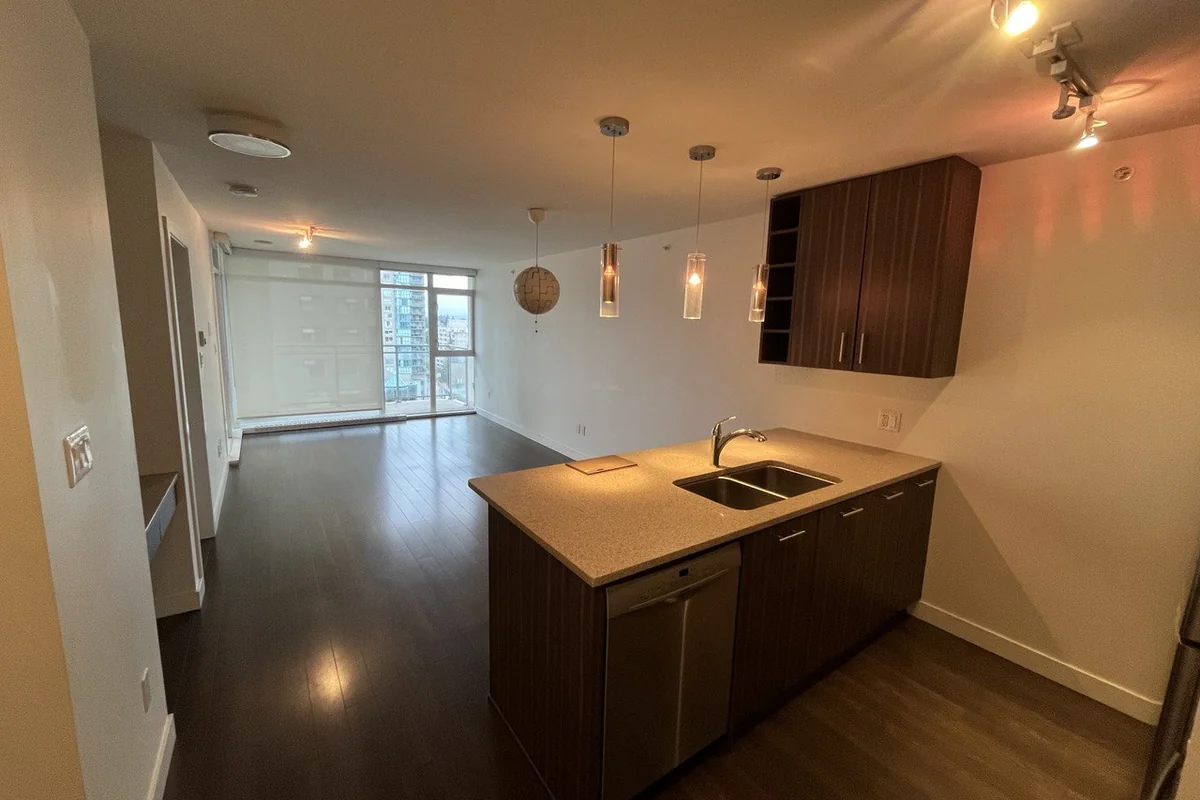
In Vancouver condos, floating or glue-down engineered flooring over an approved acoustic underlay is the most common solution, because stratas require sound control between units. See our guide to BC strata renovation rules.
Which One Is Right for Your Room: Kitchen, Basement, Condo or Over Radiant Heat?
| Room | Best Choice | Notes |
|---|---|---|
| Kitchen | Engineered (or solid in houses) | Wipe spills quickly, use mats at the sink, avoid dishwasher leaks |
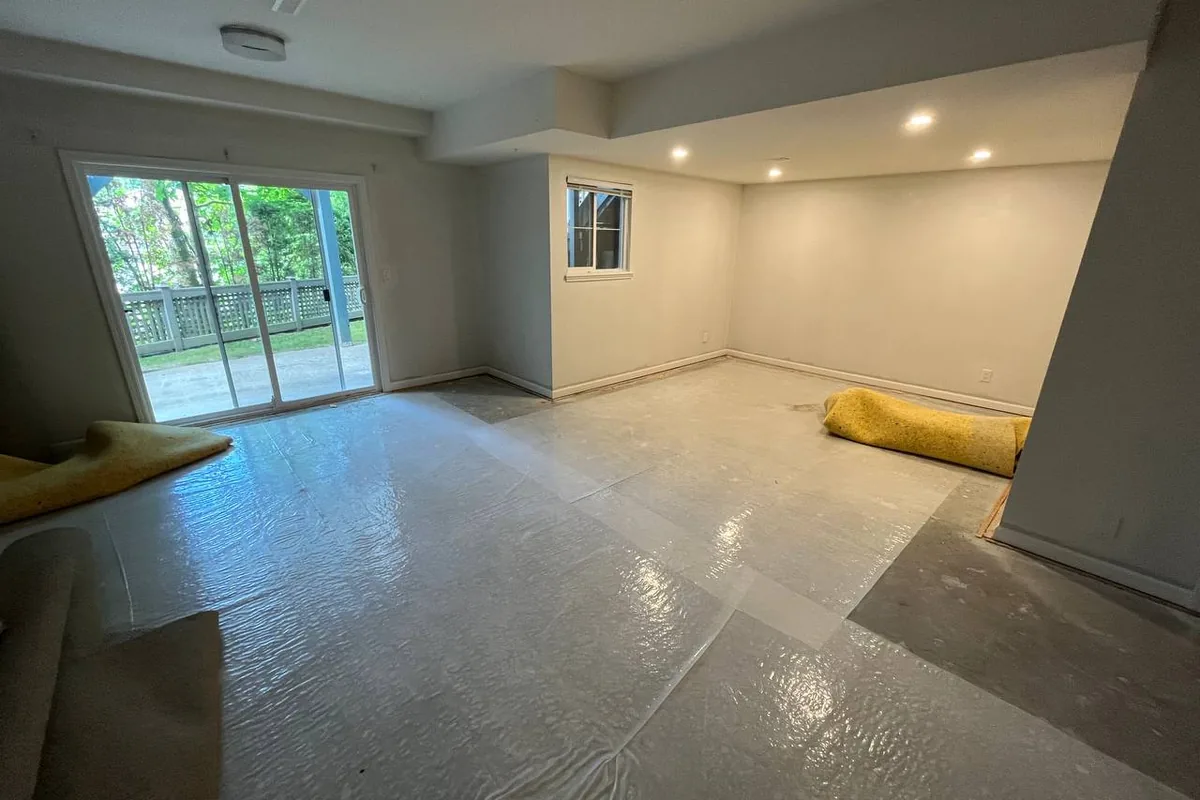
| Basement | Engineered only | Requires moisture testing and a vapour barrier; LVP flooring is often safer |
| Condo | Engineered | Floating or glue-down with acoustic underlay |
| Over radiant heat | Engineered | Use approved products; follow surface temperature limits from the manufacturer |
| Bedrooms and living areas in houses | Either | Solid is ideal over wood subfloors |
| Bathrooms | Neither recommended | Tile or waterproof vinyl is a better choice |
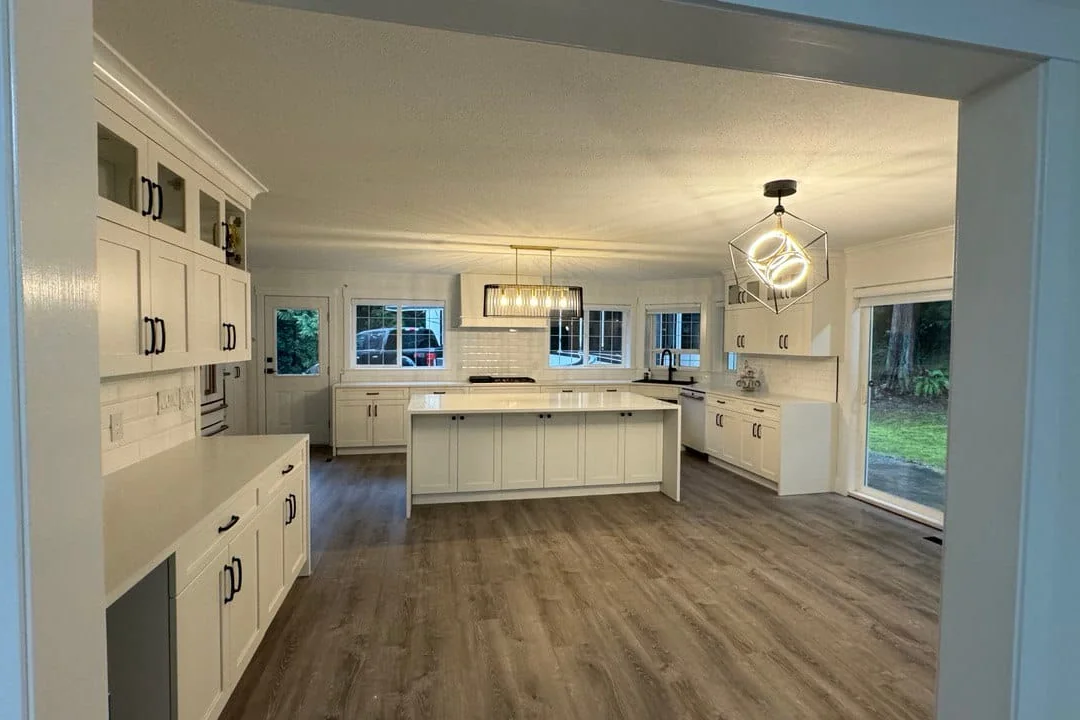
Can you put engineered hardwood in a kitchen? Yes. Engineered hardwood is widely used in kitchens, especially open-plan layouts. Its stability helps with humidity changes from cooking. Choose a durable finish and address leaks immediately. If you are renovating your kitchen at the same time, see our kitchen renovation services in Vancouver.
Frequently Asked Questions About Engineered and Solid Hardwood
Is engineered hardwood real wood?
Yes. The top layer is real hardwood, and the core is made of wood-based layers.
Which adds more value to a home?
Buyers generally view quality engineered and solid hardwood similarly. Condition and finish matter more than construction.
Is engineered hardwood cheaper than solid?
Usually slightly cheaper to buy and install, though premium engineered floors with thick wear layers can cost as much as solid.
Can engineered hardwood be refinished?
Yes, if the wear layer is at least about 2 mm. Thicker wear layers allow more refinishing.
Is engineered hardwood good for dogs?
It can be, especially with a hard species and matte finish that hides scratches. Neither product is scratch-proof.
Get Expert Hardwood Flooring Installation in Vancouver
If new floors are part of a bigger project, we can include them in a condo renovation in Vancouver or a whole-home renovation.
Choosing the right floor is only half the job. Subfloor preparation, moisture testing, acclimatization and the right installation method determine how a floor performs over decades. Reimagine Construction & Renovation installs engineered hardwood, solid hardwood, LVP and laminate across Greater Vancouver.
Contact us for an estimate.